
6. Embedding The AI Coach
Sounds smart. It might work. But there’s a structural problem.

Yesterday I heard an executive describe his company’s AI strategy.
“We’re not going to train you guys on AI.
We’re embedding AI experts inside each department.”
Finance gets one. Marketing gets one. Operations gets one. Etc.
The idea is simple. Instead of waiting for thousands of employees to learn AI tools, you bring someone in who already knows how to use them, they sit next to the leader, and roll out solutions. Analysis. Automation. Agents. Reports. Workflows.
Real output. Real productivity. Fast!
This approach is gaining traction. Consulting firms talk about:
• AI translators
• fusion teams
• hub-and-spoke AI operating models
• embedded AI pods
The logic is compelling.
Challenge: AI tools are powerful, but most leaders don’t know how to use them effectively.
Solution: Instead of training everyone, you embed capability directly where decisions are made.
Give the executive a coach. An AI coach. Let’s call them Coach #4.
Feels smart. About as smart as building an expensive building on sand.
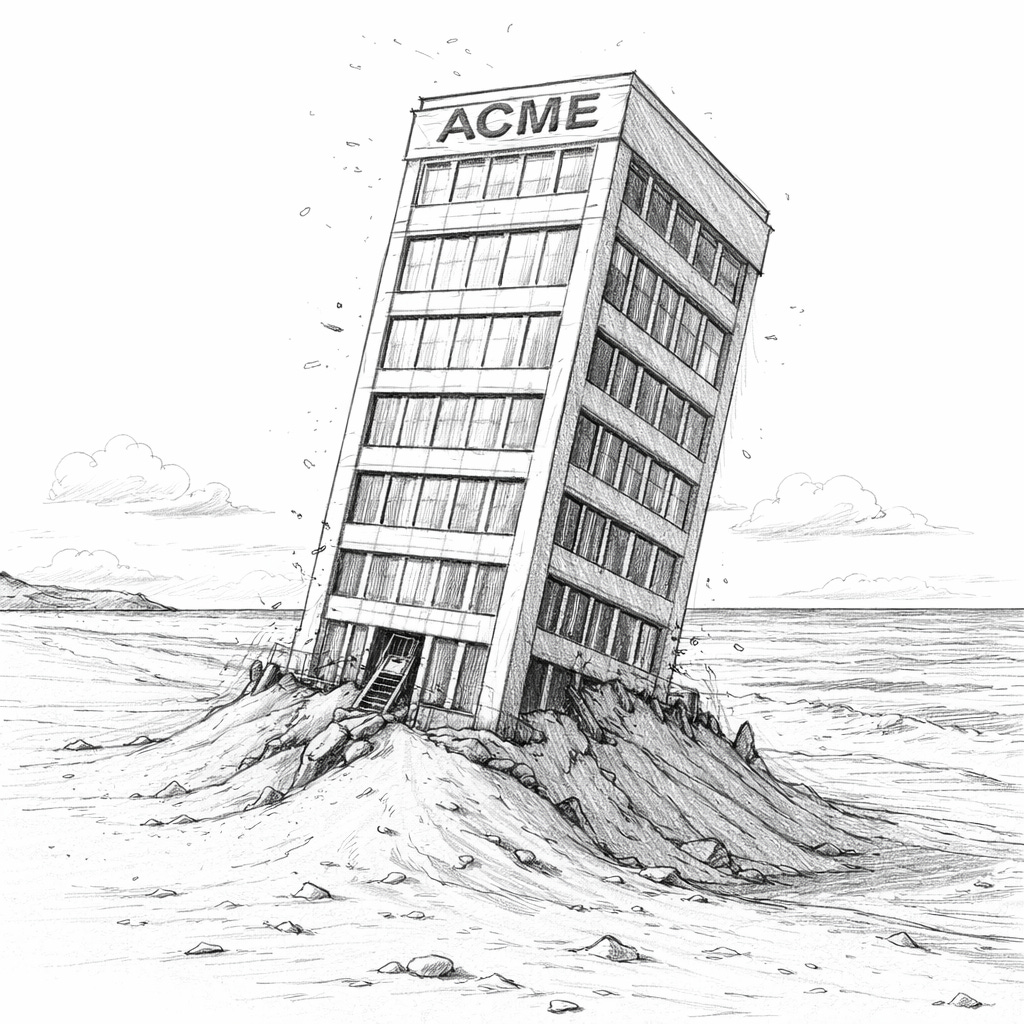
At first glance, Coach #4 sounds like progress.
It feels like action, but runs with risk that’s hard to see.
I believe it will produce real work for many firms. Work gets done faster. Experiments happen sooner. Ideas turn into outputs. And right now, organizations feel enormous pressure to capture the productivity gains promised by AI.
Pressure is mounting to move, and internal leaders sit at the intersection of compounding confusion and the pressure to act.
A classic pattern emerges:
you go with with what experts tell you (consulting industry)
you grab at new offerings (tech and tools)
you follow what peer organizations do (trends)
Embedding AI experts checks all three boxes.
To see it, we need appreciate the Human Embodiment Problem, and then revisit the last post. In sports, great coaches focus on fundamentals.
Ball control. Positioning. Passing. They know that advanced plays only work when the underlying techniques are solid.
That’s why Coach #3 — the Quality Reps Coach — focuses on deliberate practice. When pressure hits in a real match, players don’t rise to theory. They fall to their training. This is common knowledge, but do we apply it in business? If we do, it’s underachieving expectations, at least that’s what CEOs are saying.
“Only 23% said they believe their leaders
have the capacity to lead through today’s disruptions.”
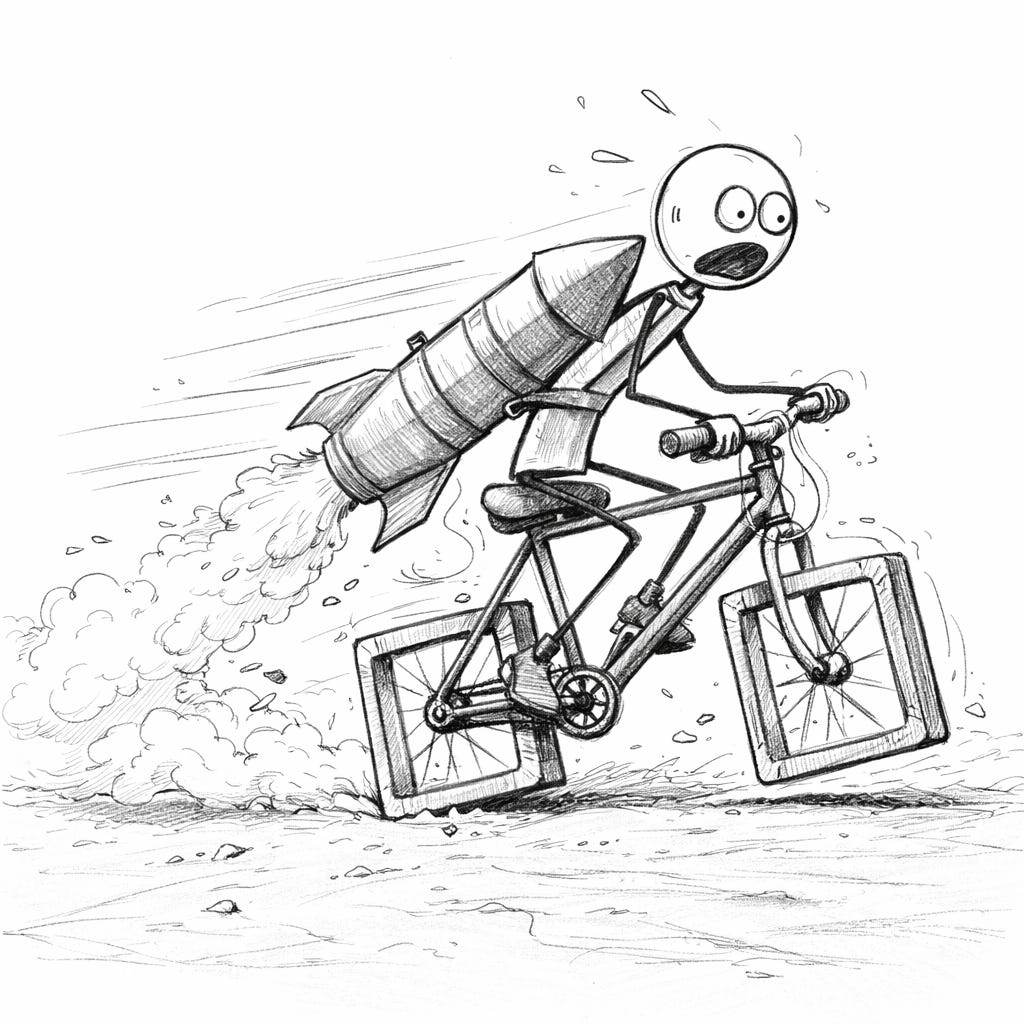
Besides AI saavy, what does (AI) Coach #4 need to bring?
The two that matter more than anything else:
problem solving
and
decision making
Imagine introducing powerful AI tools into an environment where these two fundamentals are weak?
AI systems require something very specific to work well. Three things must be clear:
• the problem
• the decision criteria
• the measure of success
Without those inputs, AI still produces output. Lots of output. But output isn’t the same as progress. Which leads to two simple equations – one you want, one you don’t.
AI × opinion = faster confusion
Instead of:
AI × structured reasoning = progress
This is the multiplier problem. AI accelerates whatever thinking system already exists inside the organization. If teams operate in structured reasoning environments, AI becomes a powerful amplifier. If teams operate in Opinion Land, AI amplifies the noise. Faster analysis. Faster narratives. Faster justification. But not necessarily faster problem resolution or better decisions.
This doesn’t mean the embedded AI strategy is wrong. It simply means it’s incomplete. Embedded AI experts can accelerate the reps. But if the fundamentals aren’t there, the reps reinforce bad technique.
The deeper issue is something most AI strategies ignore.
Organizations have invested heavily in infrastructure for data, cloud, and AI.
Very few have invested in reasoning infrastructure.
Problem solving and decision making are the data architecture for human thinking.
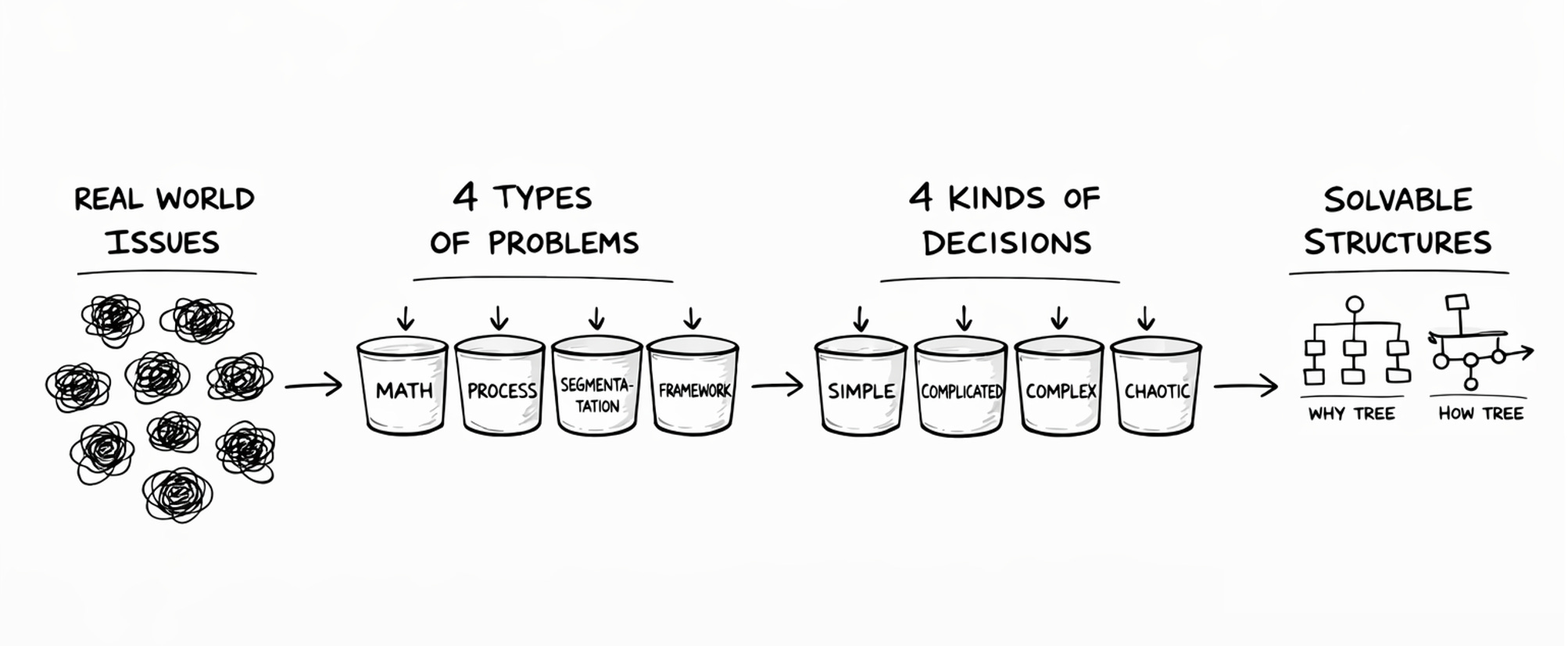
In the face of accelerating change, the most durable lever companies have is the human capacity to solve problems and make decisions effectively.
That’s the foundation. Without those fundamentals, the tools will fall short of expectations.
And the next wave is already forming. Companies won’t just embed AI experts. Leaders will be managing a team of AI agents, or AI workers. Executing tasks, running workflows, and producing work alongside humans. Which raises an interesting question.
If leaders struggle to frame problems for humans…what happens when they have to frame them for machines?
AI is a multiplier.
The real question is: multiplier of what?