
8. So what do we do about it?
Opinion Land is the problem. What’s the fix?

Here’s the logic for this post:
We know Opinion Land is a problem. CEOs aren’t seeing good solutions.
The fix is elusive because…
We think we understand systems, when we don’t
Humans regulate for safety - physical and psychological
Opinion Land runs on a fear-based status game
The fix isn’t learning. It’s capability.
Coaches in skill-based sports have already proven this
There are only two fundamentals: problem solving and decision making
What you see when you get it right depends on who you are.
WE KNOW OPINION LAND IS A PROBLEM
CEOs ARE ASKING THE SAME QUESTION
CEOs are acknowledging they are in a tough spot, they’re looking for solutions.
Leadership is the #1 priority.
The current bench isn’t ready.
And hiring won’t fix it.
Transformation is a must in the AI era. But CEOs are saying the people expected to lead it don’t yet have the capability to do so.
Old playbook isn’t working. We need a new one.
THE FIX IS ELUSIVE (RECAP, 3 REASONS)
Reason 1 - Bicycle Problem is the Corporate Problem
(ie, this is the drag on productivity)
We think we know… until we have to explain it.
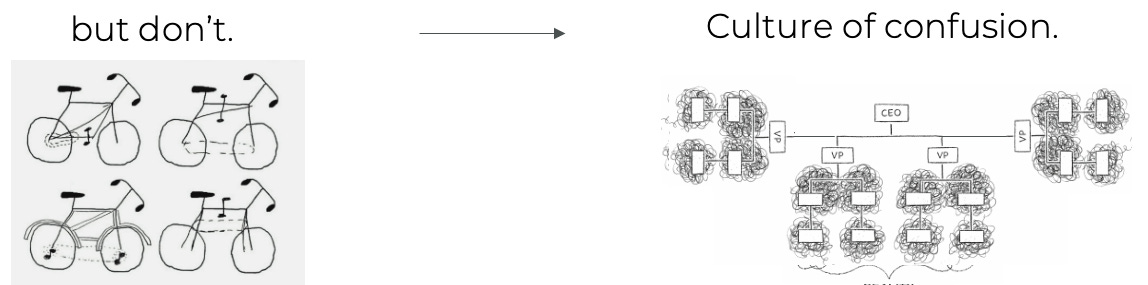
It means that we humans operate without an understanding of basic systems we depend on. It’s predictable. It’s pervasive. It creates a culture of confusion.
Reason 2. Humans are wired to seek safety, not clarity.
(ie, the “why” for this Substack)
Confusion is uncomfortable. Under pressure, it feels dangerous. And when short-term signals start flashing “something’s wrong,” a few billion years of evolutionary programming kicks in: Get OUT of there!
This isn’t weakness. Its biology.
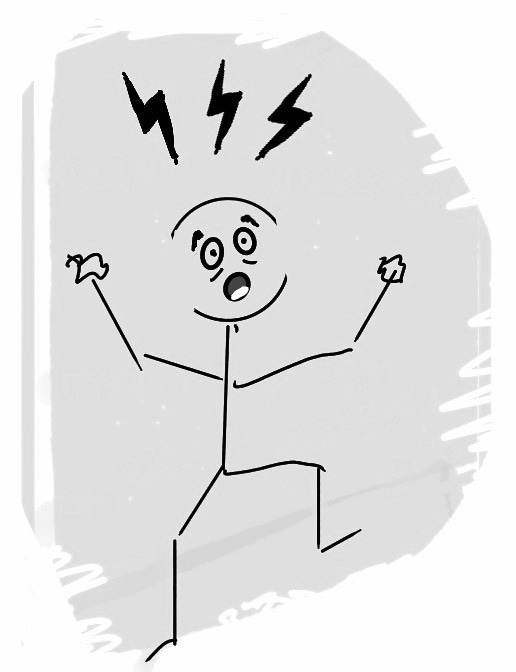
In simple terms:
Avoid pain = avoid destabilization
Seek comfort = maintain stability
The earliest life forms solved this with one capability: monitor gradients that signal danger or stability.
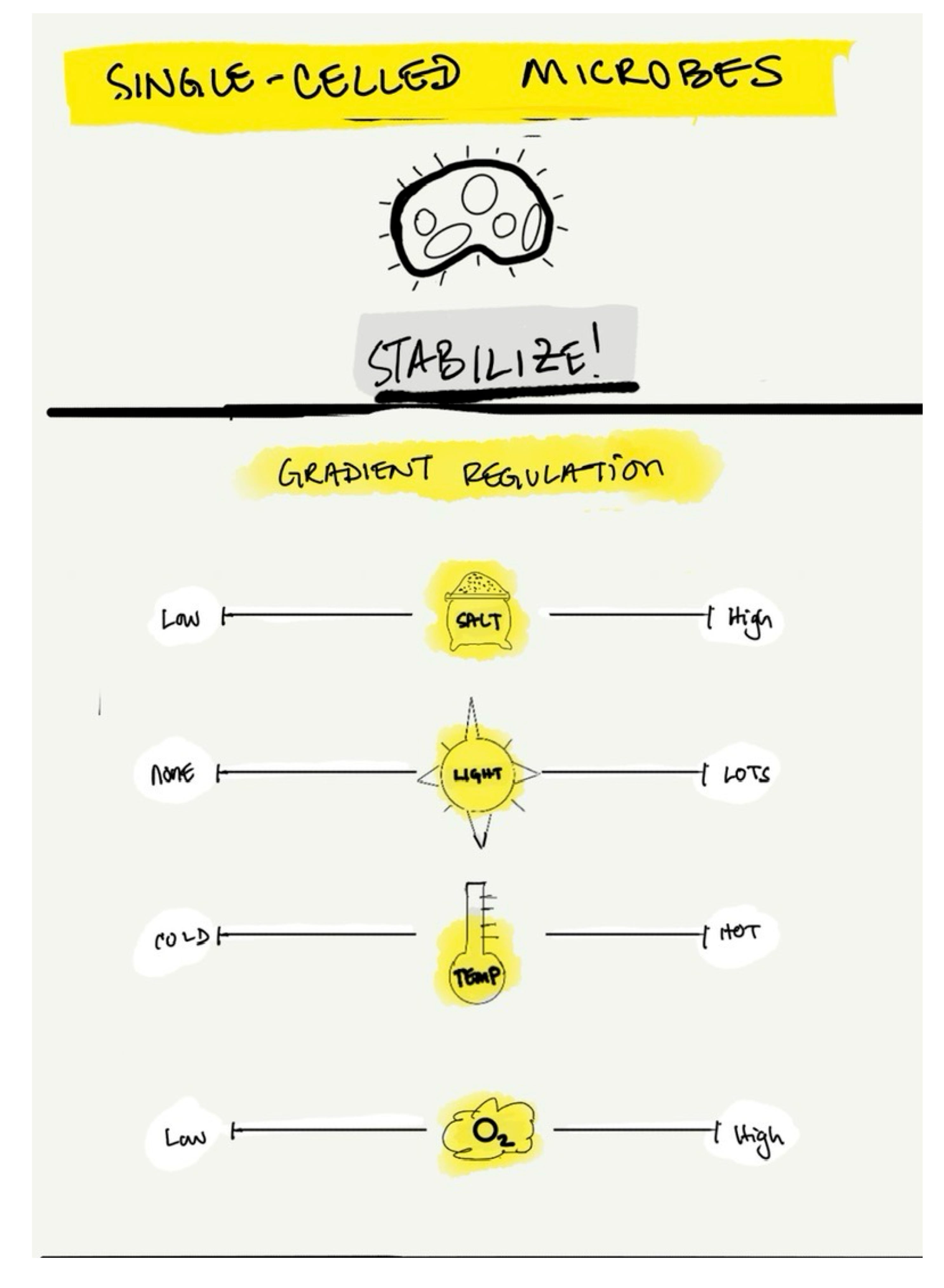
That’s adaptive. And it still runs you. We didn’t lose this system, we extended it.
Human behavior is built on the same survival architecture and it operates with a more sophisticated version of the same capability: monitor signals that predict physical and psychological safety (or danger).
Single-celled organisms regulate environmental gradients.
Humans regulate safety gradients.
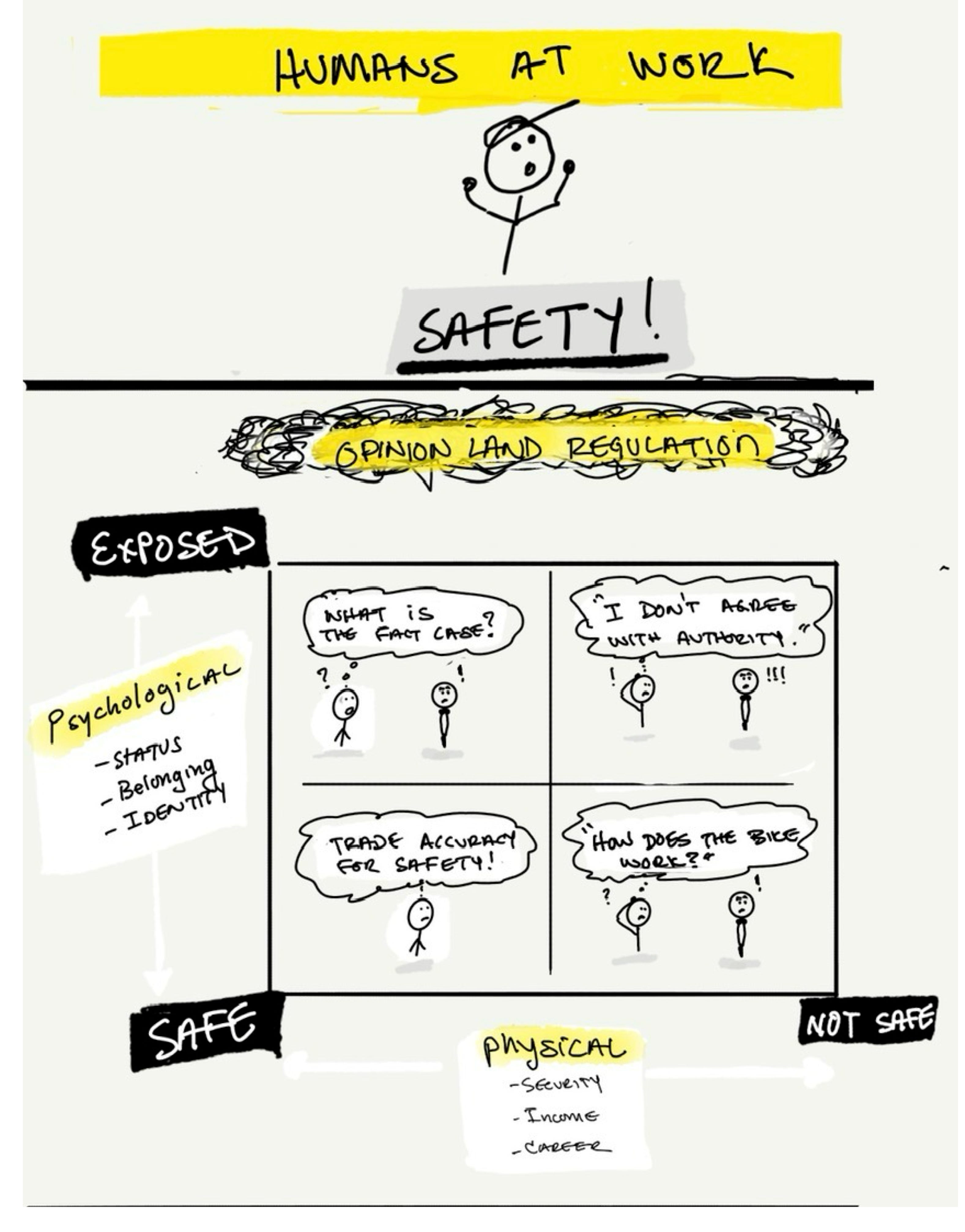
The implication?
Reading this post won’t change it.
Talking about this post won’t change it.
Deliberate skill acquisition will change it.
Without deliberate work on reasoning skills, we don’t solve problems, we manage safety.
That’s how Opinion Land starts.
Reason 3. Opinion Land is a powerful OS. It sucks.
(ie, how a culture of confusion hardens)
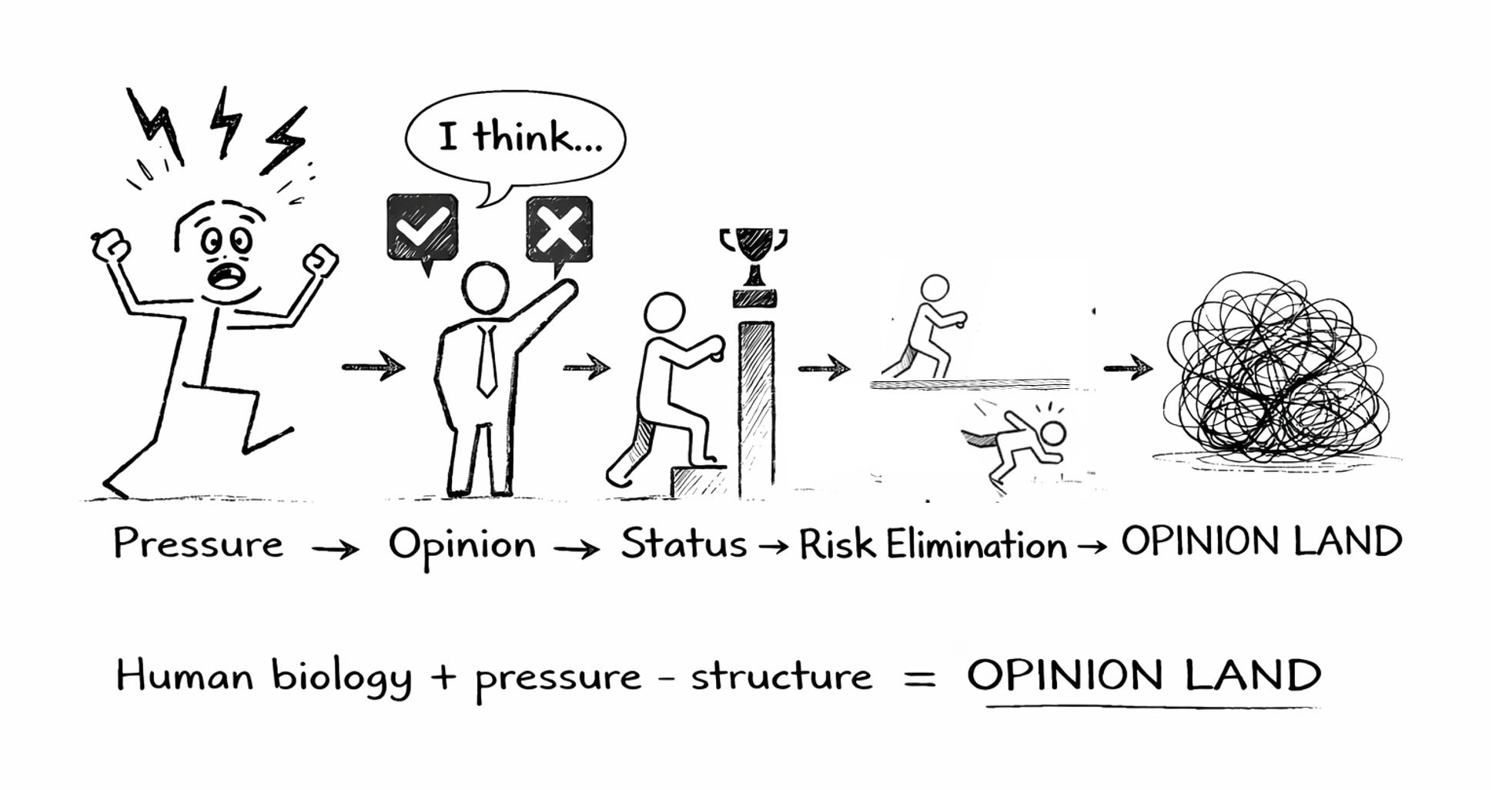
Opinion Land is the operating environment of most organizations.
Opinion Land emerges when biology meets pressure without capable reasoning.
Opinion Land trains people to survive the status game.
Pressure → Opinion → Status → Risk avoidance → Threat elimination
Repeat it enough and it becomes the system.
You don’t get clarity.
You get a system optimized for safety, not truth.
And left alone, it doesn’t fix itself. It scales.
That’s Opinion Land.
THE FIX TO OPINION LAND - CAPABILITY
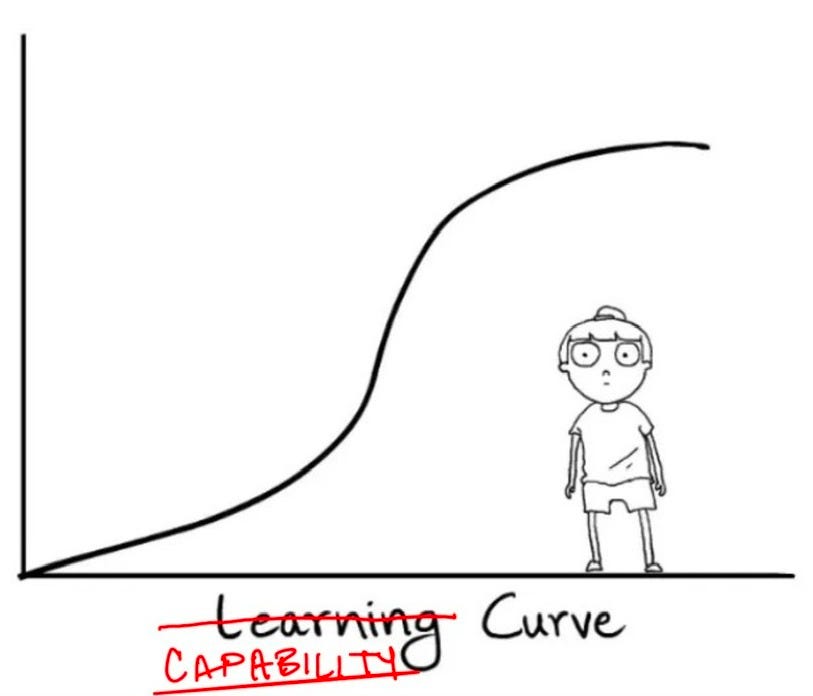
The fix isn’t more learning. It’s capability. Not Coach #1. Not Coach #2. It’s Coach #3.
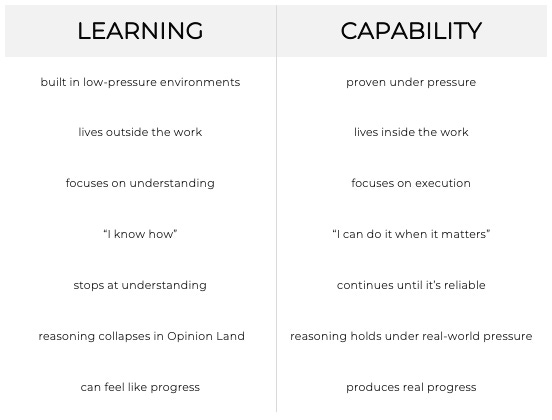
Learning is acquiring the skill.
Capability is performing it when it counts.
Learning assumes knowing leads to doing.
Capability requires doing under pressure.
THE DIFFERENCE BETWEEN LEARNING & CAPABILITY
WHAT CAPABILITIES PULL US OUT OF OPINION LAND?
That’s where I started.
In any skill-based sport, the first move is to anchor everything in fundamentals.
There are only two skill areas that matter:
How we solve problems.
How we make decisions.
There are only 4 ways to solve a problem.
There are only 4 kinds of decisions to make.
Tools and processes are utilized in those two skill areas.
If you develop capability in these, you eliminate the Bicycle Problem.
HOW WOULD YOU BUILD THOSE CAPABILITIES?
Here’s how sports coaching expert Howard Goldsmith (Talent Myth) would say it.
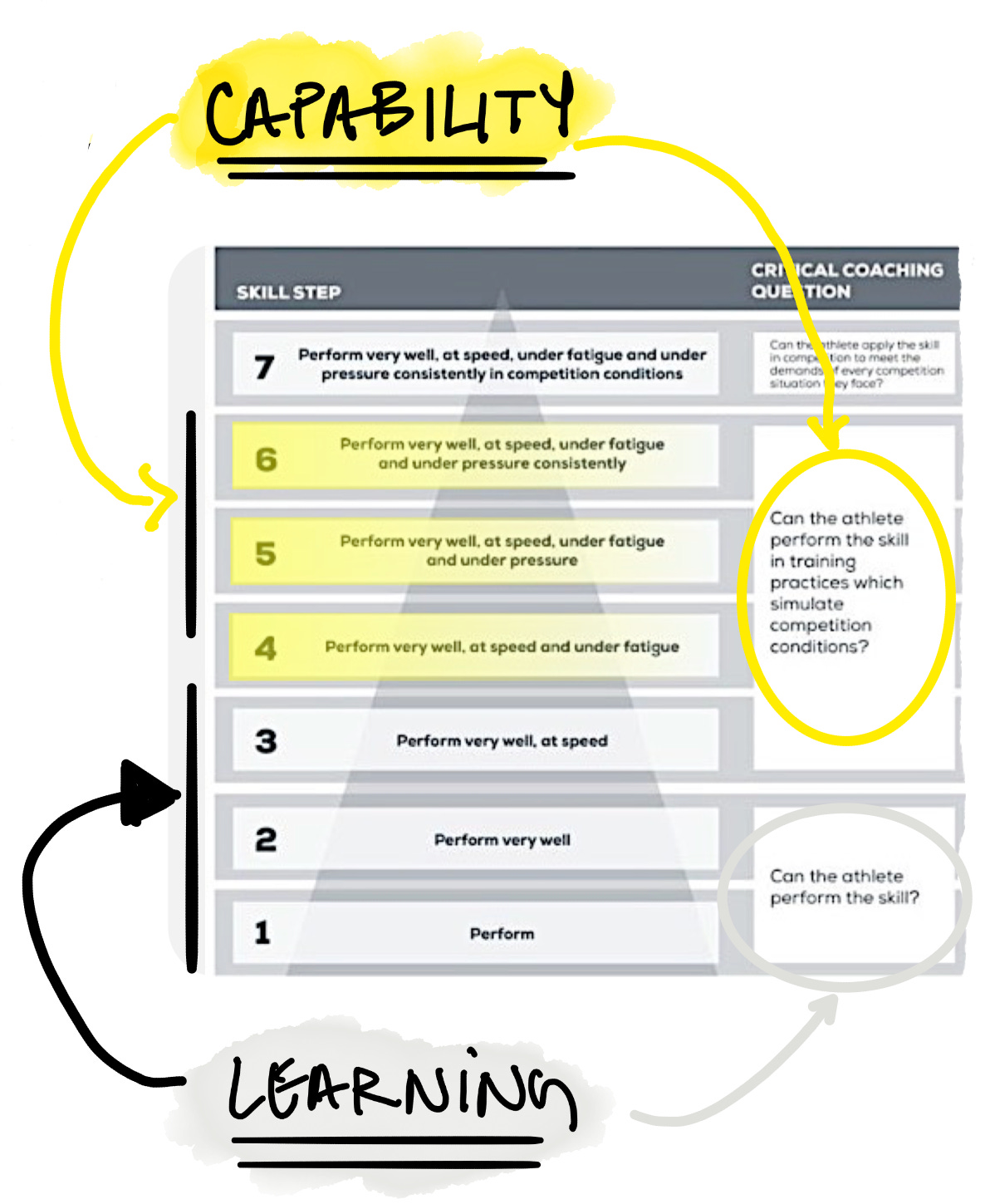
Master the 4 ways to solve a problem, and you can meet any situation.
Master the 4 types of decisions, and you can make the right call.
Here’s a checklist.
Does my development program…
specify the skills required to solve problems and make decisions well?
prove capability for each skill?
use real-world reps?
measure performance under real-world conditions, over time?
What happens when you get it right?
You move from a status game of opinions… to a game of progress.
Not occasionally. Consistently.
Problems get defined and solved correctly. Decisions get made with clarity.
Teams move forward because the work is grounded in reasoning, not noise.
WHAT YOU SEE WHEN YOU GET IT RIGHT DEPENDS ON WHO YOU ARE:
If you’re in L&D…
You stop delivering programs that feel like progress but break under pressure.
You start building capability that shows up in the work. Provable, repeatable, and durable. Engagement goes up. ROI goes up.
If you’re a CEO…
You finally have a logic for a Center of Excellence that works. Not another function. Not another tool. A system for building capability, whether AI is embedded or not. Your company breaks the tradeoff between speed and rigor.
If you’re an operator…
You manage the micro-shocks with a calm confidence that comes from competence. You’ll have the structure you need to solve any problem, or make any decision. You’ll improve your game, and up-level those around you.
If you’re an educator…
You will have a method for developing reasoning skills in the classroom. You move beyond teaching for understanding and into solving real problems and making real decisions. These are the skills of self-direction. This is what self-determination looks like in practice. Meet cognitive offloading head-on. Build real agency.
If you’re an investor…
You move beyond narrative explanations to predictable performance. Human readiness becomes the only lever that holds under pressure. Structured reasoning. At speed. With rigor. Improve it across the portfolio, and the gains compound.
CONCLUSION:
This isn’t about better thinking.
It’s about reliable reasoning under real conditions.
That’s what breaks Opinion Land.
That’s what creates progress.
In the next posts, I’ll break down…
the four ways to solve a problem
the four types of decisions